






2025 has been a defining year for sustainability, with shifting regulations and evolving expectations.
Looking ahead to 2026, there are many challenges on the horizon for businesses, the built environment, and sustainability more broadly.
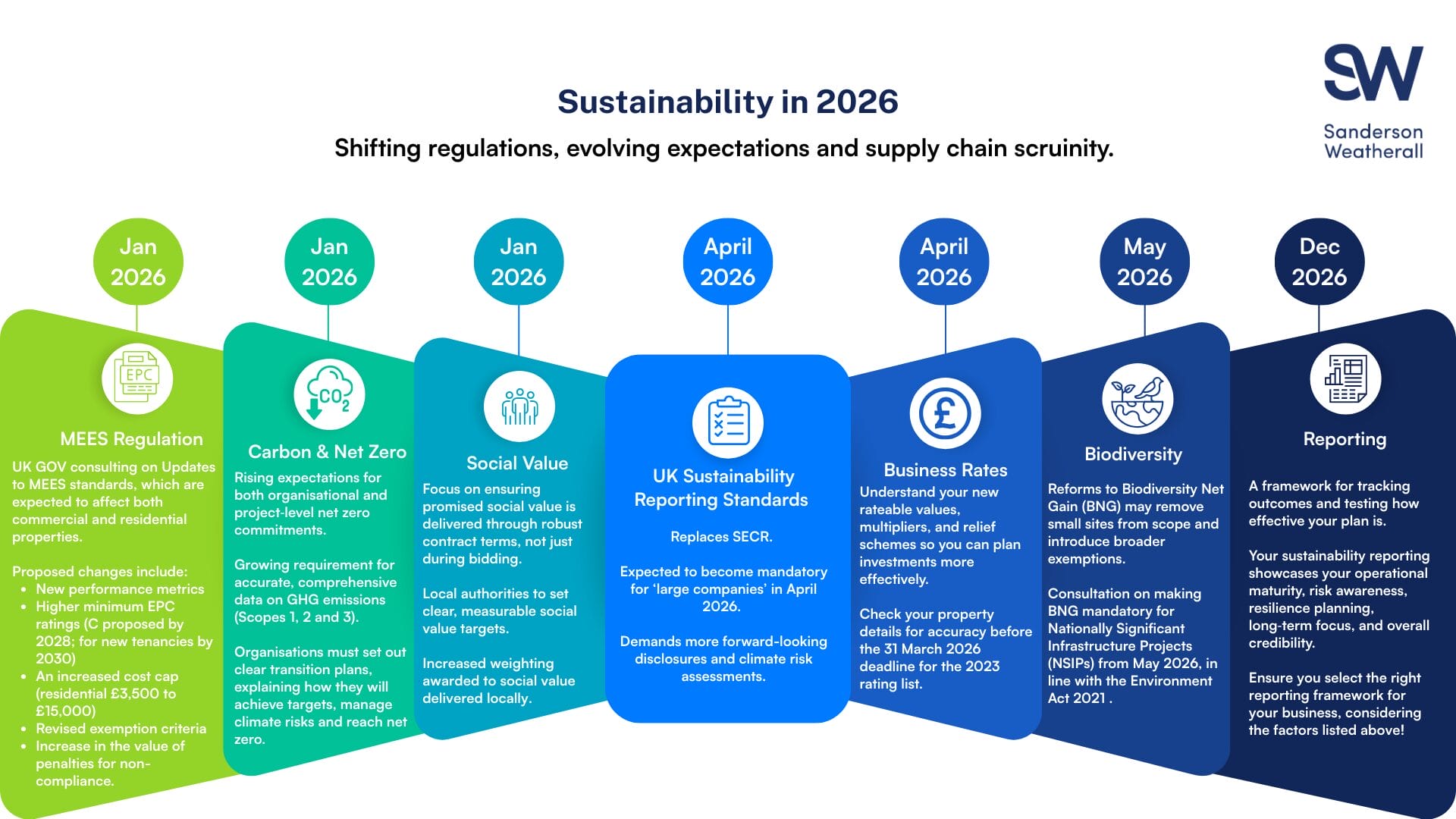
These include the introduction of UK Sustainability Reporting Standards (replacing SECR), likely changes to MEES regulations, planning application changes, budget pressures, and business rate reforms that will affect investment opportunities and capital expenditure for sustainability initiatives and improvements.
Meanwhile, supply chains are under greater scrutiny now more than ever, as expectations and standardisation around biodiversity, carbon, and social value continue to rise.
Shifting employment policy developments and trends, such as the UK Workers’ Rights Bill moving towards Royal Assent, which aims to curb exploitative practices and strengthen workers’ protection, are driving (and rightly so) growing demand for more equitable, engaging workspaces. At the same time, apprenticeships are evolving from a niche pathway into a vital component of the modern workforce.
We also face our own challenges: balancing growth ambitions with our Net Zero commitment; developing and evidencing our transition plans; building ESG literacy; aligning employment drives with framework wins; recertifying under the tighter B Corp standards; and continuing to embed social value delivery as a core part of our projects and alongside our partners.
Sustainability is central to business decisions, investment, and value creation. Although the industry is still relatively young, Sanderson Weatherall | certified B Corp has already helped clients navigate EPC and MEES changes, deliver building consultancy services, consciously manage property portfolios, unlock value from otherwise redundant assets, align valuations with ESG credentials, and strengthen business and investment cases.
We’re well-equipped for the challenges in 2026!